
Photo by Sunguk Kim on Unsplash
At its depth, what represents forgiveness is the letting go of resentment after harm has occurred, a shift in feeling and intention that moves both sides beyond the injury and toward repair. Understanding what represents forgiveness helps people see that forgiveness is not a vague ideal. It is a set of real acts, deep traditions, and powerful symbols that shape the human experience.
What Forgiveness Looks Like in Life and Story
People wrestle with the question of what represents forgiveness every day. The answer sometimes begins with very specific moments: a spoken apology, a shared meal after conflict, a decision to speak again after silence. In literature, a fiction novel about wrongful accusation and forgiveness illustrates this well. In these stories, a character carries the weight of blame or betrayal, then learns to forgive others and themselves. These moments teach readers that forgiveness plays out in choices and consequences.
Philosophers define forgiveness not just as an emotional release but as a deliberate shift in how a wronged person relates to a wrongdoer.
This shift may involve giving up resentment, changing behavior toward the other person, and sometimes reconciling. Many thinkers see it as a relational act that reshapes interactions in deep ways.
Ancient and Cultural Symbols That Show Forgiveness
Symbols help people grasp complex ideas. They make internal changes visible. Across cultures, what represents forgiveness has been captured in objects, shapes, and motifs that embody letting go and starting again. Many of these are considered universal symbols of forgiveness, understood across different traditions and societies as markers of peace, reconciliation, and moral renewal.
Olive Branch: Peace and Renewal
The olive branch stands for peace and reconciliation. It appears in art, ritual, and speech as a sign of putting conflict behind us and seeking harmony. Offering an olive branch is itself an act of forgiveness, not just a symbol of it.
Native American Circle Symbol
A circle with horizontal lines running through it is known in some Native American traditions as a sign that signifies what represents forgiveness. It suggests letting past harm fall away and entering life with renewed purpose.
The Cross: Forgiveness and Sacrifice
For many Christians, the cross represents forgiveness. It signals the idea that wrongs can be forgiven and relationships restored. It also reminds people that forgiveness often involves struggle and deep moral commitment.
Mpatapo: Knot of Reconciliation
This Adinkra symbol from West Africa shows a knot representing the complex ties between people. It stands for reconciliation and peace after conflict, showing that what represents forgiveness often includes the work of untangling hurt and rebuilding trust.
Dove and Olive: Harmony and Release
The image of a dove carrying an olive branch pairs peace with hope and release. It shows that forgiveness clears emotional weight and opens space for life’s next chapter.
Everyday Acts That Show Forgiveness
Symbols are meaningful, but what represents forgiveness in daily life is the actions people take when they choose to move beyond pain.
Saying “I’m Sorry” With Listening
An apology alone may not end the harm. Real forgiveness includes listening and taking responsibility. When someone responds to an apology with openness, that moment can mark the start of healing.
Choosing Not to Retaliate
Forgiveness often means dropping the instinct to repay harm with harm. Choosing restraint is one of the clearest acts of forgiveness and signals a real change in heart.
Making Amends
Repairing harm with concrete steps, such as restoring what was broken or offering help, shows forgiveness in action. It confirms that forgiveness is not mere words but a lived choice.
Public Rituals of Forgiveness
Some communities practice shared rituals that create space for forgiveness. Jain traditions celebrate Kshamavani, a day when people ask for and offer forgiveness to all they know, releasing collective burdens and renewing relationships.
Letting Go of Grudges
At its simplest, what represents forgiveness is the decision to release a grudge that has kept tension alive. This happens privately or publicly, but it always changes the inner life of the one who forgives.
Why People Forgive
Philosophically, forgiveness answers several deep human needs. It restores broken relationships and relieves emotional burdens. It transforms how people see one another. Forgiveness signals that the past remains part of our story, but it no longer controls our future.
Some argue that forgiveness benefits the person who forgives by freeing them from resentment. Others think it primarily restores social bonds. Whatever the motive, the act of forgiving reshapes what was once harmful into something that no longer dominates life.
Practices That Help Cultivate Forgiveness
Forgiveness is not always easy. People often build habits that prepare their hearts and minds for real change.
Reflective Journaling
Writing about hurt and healing helps people face what they feel. It clarifies where they hold resentment and what they wish to release.
Mindful Breathing and Presence
Practices that promote calm attention reduce emotional intensity. This clarity makes the shift in what represents forgiveness easier to access.
Empathy Training
Seeing another person’s perspective helps people recognize shared humanity. Empathy does not excuse harm, but it often softens walls between people.
Guided Conversations
A structured dialogue guided by a third party helps both sides express hurt and acknowledge impact. This builds mutual trust and lays the groundwork for forgiveness.
What Forgiveness Does in the World

When people forgive, harm does not disappear. But the space that resentment held becomes open for cooperation, trust, and shared life again. Communities that practice forgiveness show less long-term conflict and greater resilience after a crisis.
Forgiveness in Personal Narrative: A Deeper Look
Stories shape how people understand what represents forgiveness. In narratives where a protagonist must reconcile with past harm, forgiveness becomes more than an idea. It becomes lived.
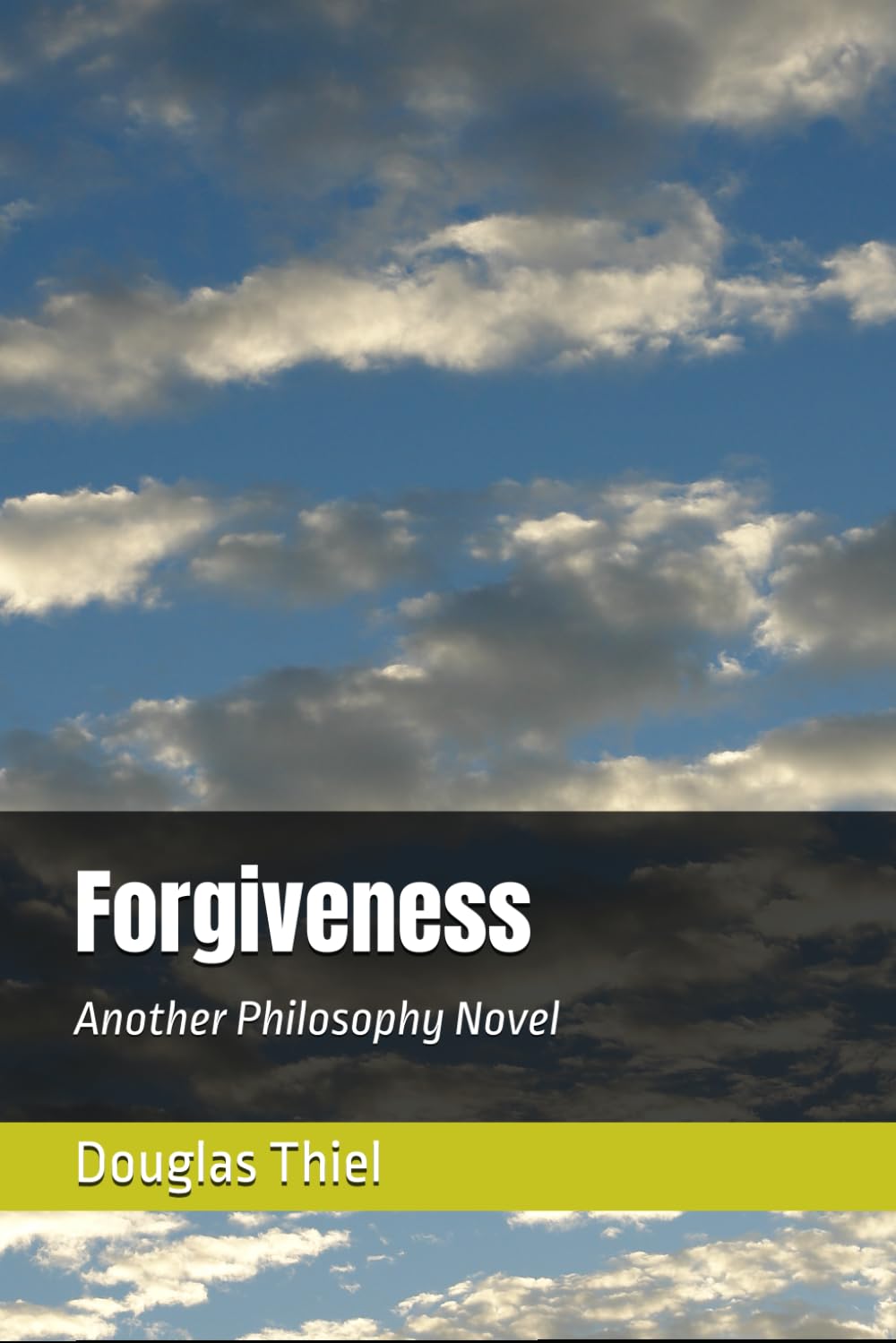
One book that stages this strikingly is Forgiveness: Another Philosophy Novel by Douglas Thiel. It follows a Kentucky boy, Petie, who experiences violence, volunteers for the military, survives Vietnam, then builds a career in the Los Angeles Police Department guided by philosophical questioning along the way. After his estranged father dies, he must face the nature of forgiveness—both the wrongs done to him and those wrongs that his sister, Sabrina, believes happened to her when Petie left his Kentucky family when she was only five years old. His journey shows that forgiveness intersects with identity, memory, and the moral complexity of life. This novel shows how forgiveness shapes character and meaning, not just endings. In Petie’s case, he faces the unforgiving nature of Sabrina, for the pain he caused her by leaving his family. Petie travels back to Kentucky for his father’s funeral and speaks with Sabrina for the first time since he left 18 years ago. Their conversation is intense, powerful writing that lays bare the pain of not being able to forgive or forget.
The Real Work of Forgiveness: What Represents Forgiveness?
What represents forgiveness is never a single thing. It is a mosaic of symbols, acts, rituals, and choices. It lives in ancient marks like the olive branch and Mpatapo. It lives in modern moments when someone drops resentment or listens with openness.
Forgiveness requires courage. It asks people to face pain without dissolving accountability. It reshapes relationships without erasing past wrongs. In real life, as in thoughtful stories, forgiveness brings transformation that touches hearts and communities.
If readers want to explore how forgiveness weaves through life and thought, Forgiveness: Another Philosophy Novel is worth reading. It places the hard questions into human experience, showing how a lifetime of hurt can culminate in a transitional moment when forgiveness occurs during another awful event.
Grab a copy to see how a life lived through conflict and reflection reveals what represents forgiveness in the rawest, clearest terms. The journey it traces offers insight that goes beyond theory into the places where healing actually begins.
FAQs
Forgiveness represents the act of letting go of resentment after harm has occurred. It involves a deliberate shift in feeling and intention, moving both the forgiver and the forgiven beyond injury toward healing and repair.
Across cultures, several symbols represent forgiveness, such as the olive branch for peace and renewal, the Native American circle symbol for letting go, the cross for sacrifice and restoration, the West African Mpatapo knot for reconciliation, and the dove with an olive branch for harmony and emotional release
Forgiveness can be shown through actions like sincerely listening with an apology, choosing not to retaliate, and making amends by repairing harm. These acts are tangible expressions of moving past hurt.
Yes. Some traditions include public rituals that emphasize collective forgiveness, such as Kshamavani in Jainism a day of seeking and offering forgiveness to release collective burdens and renew relationships.
Personal practices that support forgiveness include reflective journaling to face emotions, mindful breathing to reduce intensity, empathy training to understand others’ perspectives, and guided conversations to build mutual trust.